Showing posts with label Chief Justice. Show all posts

'Rule of Law is in safe hands'

By Express News Service - KOCHI

Supreme Court Judges Justice Jasti Chelameshwar and Justice Kurian Joseph sharing a word during the NJA South Zone Judicial Conference on ‘Role of Courts in Upholding Rule of Law’ at the High Court Auditorium on Sunday. HC Chief Justice Manjula Chellur and Justice P R Ramachandran Menon are also seen | EXPRESS


Though the country follows a democratic set-up where the citizens have all freedom, the rule of law is never compromised. The public need not worry as the rule of law is in safe hands, Supreme Court Justice Jasti Chelameswar has said.
He was speaking at the valedictory function of the National Judicial Academy (NJA) South Zone Judicial Conference  on the ‘Role of Courts in Upholding the Rule of Law’ on Sunday. Kerala High Court Chief Justice Manjula Chellur presided over the function.
“The government comes to power through the votes of the majority. Despite boasting of a democratic set-up and one of the largest armed forces in the world, the governance in the country is based on well laid-out laws and regulations,” Chelamsewar said.
Supreme Court Justice Kurian Joseph spoke about the need for judges to respect the rights of the public.  “The courts play an important role in strengthening the trust of the public in a country where the constitution is the backbone of governance,” he said.
“If the trust of the public is to be strengthened, the judges need to remember to  respect the rights of the people. When the courts ensure that the rights of the citizens are upheld, the trust of the people will automatically increase,” Justice Joseph said.
He added that the judges should deliver judgements based on the merits of the judicial system. Also, they must remember that they are not exempt from the rulings of the court. “The courts also play an important role in upholding the principle of democracy in the land. The verdicts should be a pointer to the appropriate conduct of the citizens and prove useful for the betterment of the society,” Justice Joseph said.
Chief Justice of the Kerala High Court Justice Manjulla Chellur, Justice K T Sankaran, Justice P R Ramachandra Menon and Dr Balram Gupta, Director, National Judicial Academy, were also present at the function.
Former Supreme Court Justice K T Thomas, Justice S B Sinha, Justice P K Balasubramanian, Chief Justice of Andhra Pradesh High Court Kalyan Jyothi Sengupta and other members of the judiciary from Andhra Pradesh, Karnataka, Tamil Nadu and Kerala were present on the occasion.
The regional conference was organised by the National Judicial Academy, in association with the High Courts of various states and the respective State Judicial Academies, with the objective of creating a mechanism to help develop a system of uniformity in understanding the legal principles and judicial structure throughout the country, with a view to promote best practices in a uniform manner.
The proposed theme on the role of courts in the rule of law was conceived for the seminar with an objective to inculcate an understanding of the Constitutional underpinnings of the rule of law in the district judiciary, and promote its application for fair administration of justice.


Read More...

Gujarat assembly passes new lokayukta bill for the 2nd time


Source: TOI


GANDHINAGAR: In the continuing tug of war between Narendra Modi government and the Governor, the state assembly on Tuesday passed the Gujarat Lokayukta Ayog Bill 2013 for a second time without incorporating any major changes sought by Raj Bhavan, setting the stage for a fresh confrontation. 

Governor Kamla Beniwal had on September 3 returned the bill, passed by the assembly on April 2, to the government for reconsideration, dubbing the legislation as "complete mockery of the judicial process and detrimental to the interests of public welfare". 

The contentious new Bill seeks to establish the primacy of the Chief Minister and the government in the appointment of anti-corruption watchdog. 

The Bill, piloted by finance minister Nitin Patel, was passed by the House amid protest by the lone Opposition MLA present-- Keshubhai Patel of Gujarat Parivartan Party-- who demanded it be sent to the Standing Committee. The MLAs of main Opposition Congress and NCP were yesterday suspended for two days for creating unruly scenes. 

In the existing Gujarat Lokayukta Act 1986, the power of selection of Lokayukta is vested in the governor and the chief justice of the high court. The new bill provides for appointment of the lokayukta by a six-member committee headed the chief minister. 

The Bill passed today incorporated two minor changes from its earlier version including one pertaining to the definition of the governor. The other was deleting words 'substantive capacity' from section 3 sub section five of the bill. 

The sub-section five of section 3 of the previous Bill said, "The lokayukta shall be a person who is or has been a judge of Supreme Court of India or Chief Justice of a high court in a substantive capacity". 

The Modi government and Governor Beniwal have been at loggerheads on the issue of appointment of lokayukta ever since she appointed Justice (Retd) R A Mehta to the post on August 25, 2011 bypassing the government, triggering a prolonged legal battle. 

Though her decision was upheld by the high court and Supreme Court, the post is still lying vacant in the state as Mehta refused to take charge.
Read More...

Chief Justice of Supreme Court (June 2013- )

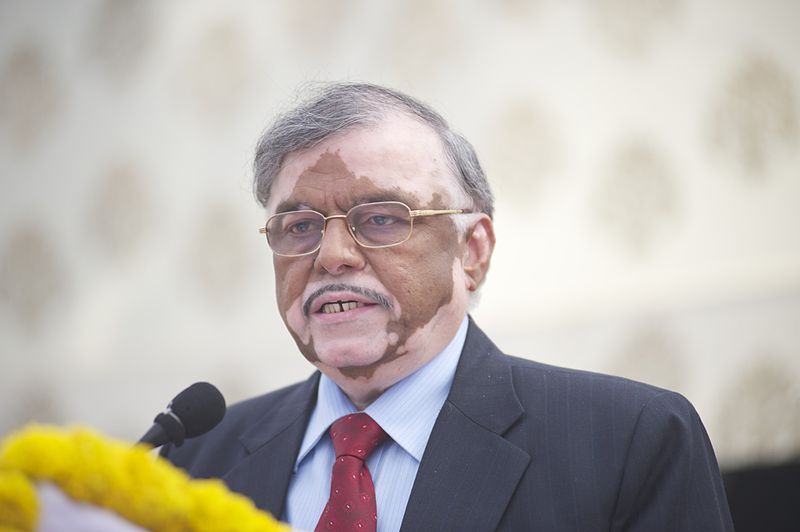
Source: Wikipedia File:P Sathasivam.jpgPalanisamy Sathasivam (born 27 April 1949) is the Chief Justice of India. He succeeded Altamas Kabir on 19 July 2013.[1] He is the 40th Chief Justice of India and the second from Tamil Nadu.

Landmark judgements

Justice Sathasivam authored several path-breaking judgements including the Reliance Gas Judgment (May 2010) wherein he emphasised the use of natural resources through public sector undertakings. He observed that “in a national democracy like ours, the national assets belong to the people” and “the government owns such assets for the purposes of developing them in the interests of the people".

He also delivered the verdict in the controversial triple-murder case of Stains and upheld the conviction of Dara Singh.[6] On 19 April 2010, he delivered the judgement in the Jessica Lal murder case of 29 April 1999. Along with Justice B. S. Chauhan, Sathasivam delivered the judgement in the 1993 Mumbai blasts case, sentencing Bollywood actor Sanjay Dutt to five years imprisonment under the Arms Act. Dutt was asked to serve out the remainder of his sentence.[2] According to J. Venkatesan, writing in The Hindu, "In a number of judgements, he [Sathasivam] cautioned the courts against awarding lesser sentence in crimes against women and children and showing undue sympathy towards the accused by altering the sentence to the extent of period already undergone."[2]
Justice Sathasivam did not deliver the Samacheer Kalvi judgement against the Jayalalithaa government, as incorrectly reported in the media; the judgement was delivered by a bench headed by Justice Chauhan.

Read More...